
INVESTORS & CREATIVES · CREATIVES & PRODUCERS
Rights ownership, catalog licensing and splits.
Afrobeats, Nollywood, digital fashion and creator-led media command global cultural influence and streaming revenue. Yet too many Nigerian creators, producers and executive studios sign away lifetime publishing, master ownership and merchandising rights for modest upfront advances. Laude Legal Partners structures uncompromising legal protection, royalty leverage and catalog wealth for Africa’s premier talent.

Advising recording artists, music producers, film showrunners and global streaming studios.
Songwriting & Beat Ownership
Ironclad producer agreements, co-writer split sheets and work-for-hire documentation executed before track release.
Distribution vs 360 Deals
Negotiating pure distribution, label services and licensing terms that preserve artist master recording ownership.
Film & TV Chain-of-Title
Screenplay options, writer rooms, cast releases, location clearances and streaming licensing for global streamers.
Statutory Protection & Enforcement
Exploiting the Nigeria Copyright Act 2022 for digital takedowns, anti-piracy, sync licensing and CMO royalty collection.
CREATIVE CAREER WORKSTREAMS
Protecting your art from studio session to global distribution.
Select a milestone in your creative journey to explore how our entertainment and media practice protects your revenue, rights and long-term legacy.
Separate composition copyright from sound recording ownership before a track goes viral.
When a record blows up on TikTok or DSPs, verbal agreements between recording artists, beat producers, session musicians and sound engineers instantly collapse into bitter disputes. Under the Nigerian Copyright Act 2022, every song contains two distinct copyrights: the musical work/composition and the sound recording. We prepare signed Split Sheets, Producer Agreements and Work-for-Hire Deeds that define exact publishing percentage splits, producer master points (royalties), beat licensing terms and upfront production fees.
Core Legal Deliverables
- Standardised Songwriter & Producer Split Sheets
- Beatmaker Exclusive & Non-Exclusive Master Licences
- Session Musician & Vocalist Work-for-Hire Releases
- PRO & CMO Registration Guidance (COSON, MCSN, BMI, ASCAP, PRS)
Releasing a track to streaming platforms using an uncredited sample or beat without written split sheets and clearing agreements.
INSIDE THE CREATIVE PRACTICE
Where cultural influence meets institutional legal rigor.
Explore how Laude Legal Partners advises premier recording artists, Grammy-winning producers, film showrunners and global streaming platforms.

Catalog Structuring & Producer Splits
Drafting producer agreements, co-writer split sheets, ISRC tagging and publisher administration for chart-topping Afrobeats tracks.
Explore service scope
Major Label 360 Deal Restructuring
Renegotiating major label contracts to remove perpetual master grabs, carve out brand deals and institute master reversion after 5 years.
Explore service scope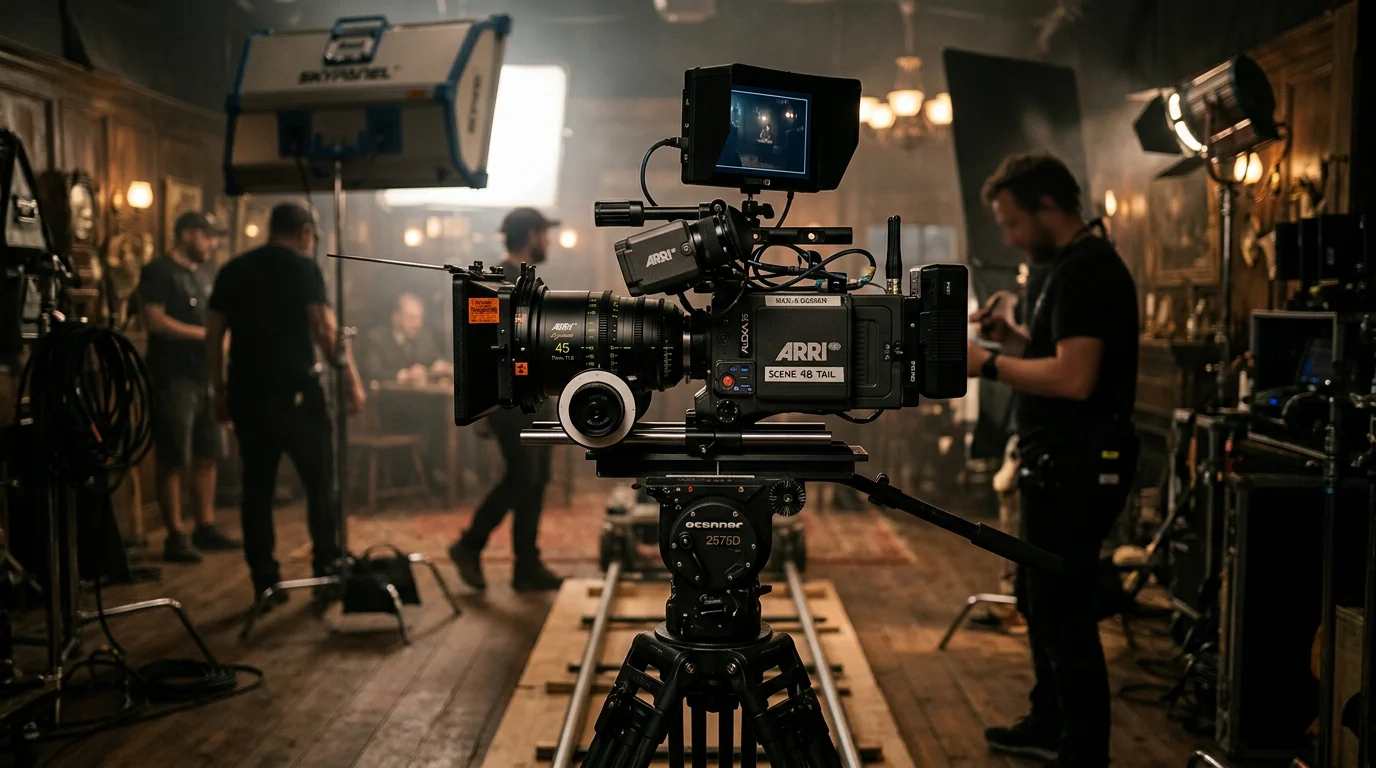
Nollywood Original Series Production Legal
Serving as production counsel for multi-episode series acquired by global streaming giants—overseeing chain of title, cast contracts and sync clearances.
Explore service scope
Music Catalog Valuation & Publishing Sales
Advising legacy artists and producers on catalog acquisitions, private equity royalty securitization and global publishing administration.
Explore service scopeTHE ENTERTAINMENT LEGAL GUIDE
Mastering the legal business behind African creative power.
Creativity is the spark, but contract architecture determines who captures the wealth. Below is our comprehensive guide to the five critical legal pillars every Nigerian artist, producer, filmmaker and creative founder must navigate.
Understanding how musical compositions and master recordings earn separate royalties.
The single most misunderstood concept in the Nigerian creative industry is the fundamental distinction between the composition copyright (the lyrics, melody and arrangement created by songwriters and beatmakers) and the sound recording copyright (the master recording fixed in the studio). Under the Nigerian Copyright Act 2022, these are two entirely separate bundles of legal rights that can be owned, licensed, assigned and monetised independently.
When an Afrobeats track streams on Spotify or Apple Music, royalties are generated in two separate streams. The sound recording earns digital performance and master streaming royalties (typically paid to the record label or DIY distributor). Simultaneously, the composition earns mechanical royalties and public performance royalties (collected by Performing Rights Organisations such as COSON and MCSN in Nigeria, or PRS, BMI and ASCAP internationally).
If an artist or producer fails to execute written split sheets at the conclusion of a studio session, the law presumes co-authorship with undefined percentages, leading to frozen DSP streaming revenues as soon as an ownership dispute is reported. Our entertainment team institutes systematic split-sheet protocols and publisher administration setups to guarantee every contributor is paid accurately.
Deconstructing advances, recoupment, master ownership and brand commission grabs.
Record labels often present recording contracts as life-changing partnerships backed by substantial upfront advances. However, under the hood of standard recording agreements, advances are not gifts—they are interest-free loans recoupable 100% against the artist’s royalty share (not the label’s gross receipts). Furthermore, recording costs, music video budgets, independent marketing and tour support are frequently added to the artist’s recoupable balance.
In a traditional deal, the record label demands 100% assignment of master recordings in perpetuity across the universe, while offering the artist a 15% to 25% royalty rate after full recoupment. In a modern "360 Deal", the label additionally demands 20% to 50% of the artist’s live touring, private performance fees, corporate sponsorships, acting roles and merchandise—even if the label played zero role in securing those opportunities.
We negotiate fiercely on behalf of talent: replacing perpetual master assignments with fixed-term licences (e.g., 5 to 7 years post-release), carving out independent brand deals and live performance fees from label commission, requiring transparent semi-annual royalty accountings with comprehensive audit rights, and defining explicit release commitment remedies if the label shelves an album.
Building an airtight Chain-of-Title Binder that satisfies global streaming platforms.
Nollywood has evolved from direct-to-DVD distribution into a high-budget theatrical and global streaming power. However, international acquisitions by platforms like Netflix, Prime Video and international theatrical distributors require institutional legal due diligence. The foundation of any film acquisition is the Chain of Title—the unbroken documentary paper trail proving the producer owns every creative component of the motion picture.
If your screenwriter adapted a real-life news event, did they secure life-story rights? If your screenwriter was inspired by a published book or article, is there an executed Option and Literary Purchase Agreement? If an actor appears in a leading role, did they sign an unconditional cast agreement waiving injunctive relief in the event of a contractual disagreement? Without these agreements, a disgruntled collaborator can obtain an ex-parte court injunction halting your film’s theatrical premiere or streaming rollout.
We serve as Production Legal Counsel across pre-production, principal photography and post-production—drafting crew agreements, location agreements, music sync licences, visual artist clearances and distribution agreements, compiling a certified Chain-of-Title Binder ready for platform delivery.
Protecting producer points, master royalties and publishing shares in the streaming era.
Music producers and beatmakers are the sonic architects of modern African music, yet historically they have suffered from informal credit and deferred compensation. A producer may receive a one-off studio fee of ₦500,000 or $2,000 for a beat, only to watch the song generate tens of millions of streams globally without receiving publishing royalties or master points.
We represent premier producers and sound engineers—structuring producer agreements that secure three critical components of compensation: (1) an upfront production advance/fee; (2) producer master points (typically 3% to 5% of the suggested retail price / PPD or 20% to 25% of the artist’s net master receipts); and (3) a 50% share of the musical composition’s publishing copyright as co-author of the musical work.
We also draft clear beat-licensing terms for producer websites—distinguishing non-exclusive lease licences (with stream and radio broadcast caps) from exclusive buyout transfers, ensuring that producers retain mechanical and performance collection rights regardless of who buys the track.
Structuring high-value brand ambassador deals and protecting commercial identity.
For tier-one African talent, brand endorsements from telecommunications conglomerates, banks, fintechs, FMCG giants, beverage brands and luxury fashion houses represent a major portion of annual revenue. Yet standard brand endorsement agreements drafted by corporate advertising agencies are often heavily one-sided—demanding indefinite exclusivity across entire economic sectors, unlimited usage of the talent’s name, image and likeness (NIL) across unpaid digital ads, and severe moral conduct termination penalties without reciprocal protections.
We review and negotiate commercial talent agreements: strictly defining the category of exclusivity (e.g., carbonated soft drinks rather than all beverages), capping the number of required social media posts, public appearances and shoot days, requiring pre-approval over all published marketing collateral, and limiting usage to defined territories and timeframes.
Concurrently, we build trademark portfolios protecting the artist’s stage name, logos, record label brand and iconic catchphrases at the Nigerian Trademarks Registry and internationally—preventing counterfeit merchandise, unauthorized endorsements and squatter domain registrations.
DEAL STRUCTURE COMPARISON
Comparing Entertainment Distribution Models.
Talent and creative studios today have choices beyond traditional 360 label deals. Here is how our entertainment practice evaluates the trade-offs between the three main commercial pathways.
| Commercial Dimension | Traditional Major Label 360 Deal | Independent Distribution & Label Services |
|---|---|---|
| Master Recording Ownership | Label owns 100% of masters in perpetuity (or 25+ years); artist holds zero copyright in recordings. | Artist/Producer retains 100% master ownership; grants distributor a temporary licence (e.g., 3–5 years). |
| Royalty Split & Master Revenue | Artist receives 15% to 25% post-recoupment; label retains 75% to 85% of net receipts. | Artist receives 70% to 85% of net receipts; distributor retains 15% to 30% distribution fee. |
| Upfront Advance & Marketing Budget | Substantial upfront advance and direct label marketing engine (fully recoupable against artist share). | Modest advance (or self-funded); artist controls their own marketing spend and creative direction. |
| Ancillary Rights (Touring & Brand Deals) | Label claims 20% to 50% commission on live shows, sponsorships, acting and merchandise (360 grab). | Zero claim on touring, brand endorsements, acting or merchandise; artist keeps 100% of non-recorded revenue. |
| Creative & Release Control | Label holds final approval over track selection, release dates, music videos, artwork and remixing. | Artist maintains complete creative sovereignty over music release schedules and visual assets. |
| Audit & Accounting Transparency | Complex recoupment accounts; formal audit required to inspect cross-collateralised expenses. | Direct online DSP reporting dashboard; monthly or quarterly automated accounting statements. |
CREATIVE LEGAL AUDIT
Audit your music, film or creator rights.
Select the agreements your creative team or studio has formally signed in writing to see where your catalog or production is exposed to rights claims.
Documented Legal Readiness Score
0 of 6 essential legal safeguards confirmed
Ready to close your remaining legal gaps?
Share your diagnostic results with our partner desk for a privileged, confidential matter assessment.
SENIOR COUNSEL
Partners who lead this practice.
Every client instruction is led by an experienced partner with direct sector expertise under Nigerian and international commercial law.

Tayo Omojesho
Tayo advises clients at the intersection of media, entertainment, corporate transactions and regulatory compliance. He combines legal expertise with a deep understanding of the creative economy — helping founders, businesses and talent navigate complex commercial and regulatory issues.
View partner profile
Babatunde Alexander
Babatunde works with startups, corporate ventures and telecommunications operators on technology transactions, regulatory compliance, data protection and commercial contracts. A founding partner of Laude Legal Partners, he blends legal acumen with deep insight into legal innovation and digital ecosystems.
View partner profile
Apara Ayemidun
Apara advises clients across media and entertainment, real estate transactions, corporate governance and commercial contracts. She combines legal precision with extensive cross-border experience in Nigeria and the United States, supporting artists, production studios, labels and corporate entities.
View partner profile
PRACTICE SCOPE
Related commercial services.
Deep legal capabilities tailored to support every step of your commercial agenda in Nigeria.
Intellectual Property
Understand the rights connected to your brand, software and creative work, and plan how to protect and commercialise them.
Explore serviceIntellectual PropertyCopyright
Clarify rights in music, film, writing, software and other creative work, with agreements that reflect how it will be used.
Explore serviceEntertainment & MediaEntertainment & Media
Make the contracts, rights and business relationships behind music, film and media work for your project.
Explore serviceEntertainment & MediaFilm & Television
Coordinate the rights, contracts and commercial arrangements behind a film, television or digital production.
Explore serviceEntertainment & MediaArtist Contracts
Review the responsibilities, rights and restrictions in a proposed artist agreement before making a commitment.
Explore serviceEntertainment & MediaManagement & Record Deals
Understand how a management or recording deal affects control, earnings, commitments and the next stages of your career.
Explore serviceEntertainment & MediaLicensing & Royalties
Document how creative work may be used and how revenue, statements and royalty checks will be handled.
Explore serviceKNOWLEDGE & ANALYSIS
Legal briefings & market intelligence.
Authoritative perspectives from our lawyers on commercial and regulatory developments shaping Nigerian commerce.
Creative EconomyRedefining Legal Mastery for Creatives in the 21st Century
Empowering Africa’s creative boom through strategic intellectual property protection, catalog acquisition, and rights management for modern artists, producers, and entertainment brands.
Read briefingIntellectual PropertyLegal Protection for African Creatives: Protect Your Work and Secure Your Future
From copyright registration and work-for-hire agreements to digital distribution deals, the essential legal foundations every African creator and creative business needs.
Read briefingMedia & EntertainmentMedia and Entertainment Law in Nigeria
A comprehensive guide to Nigeria’s media and entertainment law: navigating copyright protection, artist-manager agreements, synchronization rights, and dispute resolution.
Read briefingANSWERS FOR LEADERSHIP
Frequently asked questions.
Straightforward answers to the primary structural, contractual and regulatory questions our clients ask.
What is the difference between a split sheet and a producer agreement?
A split sheet is a concise document signed immediately after a songwriting or recording session that records the names, roles (lyrics, melody, track) and exact percentage shares of each contributor in the underlying musical composition. A Producer Agreement is a comprehensive contract that governs the business relationship between the artist/label and the producer: defining the producer’s upfront advance fee, their master points (percentage of master royalties), beat licensing scope, delivery specifications, credit metadata and audit rights.
Can an artist get out of a bad 360 record deal in Nigeria?
Yes, depending on how the contract was drafted and performed. In Nigeria, contracts that are grossly unconscionable, lack reciprocal consideration, or impose indefinite restrictions on an artist’s ability to earn a living can be challenged under common-law contract principles and restraint of trade. Furthermore, if the label breached its material commitments—such as failing to pay advances, failing to release agreed albums, or failing to render transparent royalty accountings—the artist may have grounds to rescind the contract or negotiate an exit settlement.
Who owns the copyright in a film produced in Nigeria?
Under the Nigerian Copyright Act 2022, the initial copyright in a cinematograph film vests in the person by whom the arrangements for the making of the film were undertaken (usually the film producer or production studio). However, this statutory ownership only extends to the final film itself. The underlying literary work (screenplay/novel), musical soundtrack and performances require explicit written assignments and work-for-hire releases from screenwriters, composers and actors to deliver clean title to streaming buyers.
Why do global streaming platforms require a Chain-of-Title Binder?
Streamers like Netflix, Prime Video and Showmax distribute content to millions of subscribers globally. If even one element of a film—such as a background photograph, an actor appearance or a 30-second soundtrack cue—lacks written clearance, the streamer faces potential multimillion-dollar copyright infringement claims or worldwide injunctions. A certified Chain-of-Title Binder provides the documentary proof their legal counsel requires before releasing acquisition funds.
What are master points and how do music producers earn royalties from streaming?
Master points are percentage points of the net receipts or suggested retail price of a master sound recording. For example, a producer negotiated on "4 points" receives 4% of the master recording’s net revenue (or a pro-rata share of the artist’s master royalty pool). When a song streams on Spotify or Apple Music, the label or distributor calculates the master points due to the producer after recoupment of allowable production costs. Producers should ensure their agreements include a "Letter of Direction" allowing the distributor to pay points directly into their account.
How can African creatives collect global publishing and mechanical royalties?
To collect all royalties earned when your music is played on radio, television, concerts, clubs or streaming platforms worldwide, you must register your musical works with a Performing Rights Organisation (such as BMI, ASCAP, PRS, COSON or MCSN) and a Mechanical Rights Organisation (or work with a dedicated music publisher / publishing administrator). Simply uploading a song to a DIY distributor (like DistroKid or TuneCore) only collects master streaming royalties, leaving composition performance and mechanical royalties uncollected in the global "black box".
NEXT STEPS
Let’s discuss your matter with complete confidence.
Book an initial consultation with Laude Legal Partners. We clarify the decisions, structure the documents, and protect your commercial momentum in Nigeria.